

Linear Actuators
model: PA8

Electric Cylinders:
Model: 90 series

Linear motions:
Model: 60 series
Solar Trackers:
Model: P40
Slewing drives:
Model: V9
Solar Tracker Controller:
Model: Dual axis
Industrial Linear Actuator Manufacturer of China – JimiTech!
Are you looking for an efficient industrial linear actuator that can put your machines into more stable and productive operations? If yes then, you have landed in the right place. JimiTech is one of the best and most reliable industrial linear actuator manufacturer, located in southeastern China. We are offering the most comprehensive variety of industrial linear actuators, slewing drives, electric cylinder, servo actuators, DC motors, solar tracker linear actuator, solar tracker controller, solar tracker completed system, functional tables, and so on.
Our manufactured industrial linear actuators are employed in many automation processes in multiple factories for pushing, rotating, lifting parts, and transporting equipment during manufacturing processes. Being positioned as the prime linear actuator manufacturer, our products are also applicable to be used in the vacuum or underwater conditions.
A large number of industrialists, engineers, manufacturers, OEM organizations rely on our potent and innovative products to answer various challenging processes.
Reliability & Responsibility – Our two effective weapons
When it comes to design, and produce an industrial linear actuator according to client’s demand – on customized request – then being a responsible linear actuator manufacturer, we respect it as our duty to weigh these orders , depending on particular specifications of product including; type of actuator, input voltage, load weight, size, use of frequency, and standard requirements.
If you are looking to buy gold standard of solar tracker linear actuator, then we guarantee you on time supply, credible performance, stability, timely supply, and sincere service. Our industrial linear actuators are exported to both the domestic and international market.
Always accessible & provide an ultimate convenience
Whether you have concerns regarding how to work with us or any queries concerning our procedure of product design and development, we’ve made it convenient, yet accessible for you to approach us via our website by putting all kind of information to answer your concerns and queries.
From on wards, when you look for best solar tracker linear actuator manufacturer, then don’t forget to consider us for catering all your needs! With our broad range of premium industrial linear actuator and others, you are sure to find the one that fits your definition of an ideal actuator. We also provide after sales services to our clients all over the world.
Features of Our Linear Actuators:
As one of the most prominent liner actuator suppliers in the industry we are producing the best actuators that can solve various process challenges flawlessly. We always strive to manufacture and provide our customers with whatever they ask for to consummate their project demands. We are having a broad directory of linear actuators that includes:
* Solar tracker linear actuator
* Electric rod style actuator
* High – resolution linear actuator
* Pneumatic rod style actuator
* Belt drove & Screw driven actuators
* Linear Actuators for medicines
Our manufactured linear actuators are not only famous in the local market, but we have a good reputation and outreach in international industry as well.
Best Fit For Your Project:
Being the best and dominant linear actuator manufacturer, we hold the position for producing nothing less than the best. With our highly dexterous staff, we are able to manage and satisfy the unique requirements of clients. No matter how complicated your demand is, you can rely on us to provide you with the best possible solutions. Our solar tracker linear actuator have found their application scope at various industries like a blast furnace, coke plants, hot mill areas, boiler houses, lock valving, steam control valves, cold mills, and others. We are determined to provide you with the fit for your application and can tailor our actuators upon your request.
At JimiTech, we are splendid to be positioned as the leading suppliers of industrial linear actuator to a wide array of industry. We are inviting our customers to relish in the extensive experience we have in providing a custom solution will all accessories and control to meet the diverse demands of different applications. If you are looking for actuators to deliver you stability, greater durability, and efficiency than we can serve with the best solar tracker linear actuators that are suitable for various applications.
F.A.Q
-
What are the linear motors construction?
-
How do you choose the linear motors?
What Is a Linear Actuator? A Complete Guide
In the world of engineering and automation, motion is everything. While rotary motion—spinning wheels, turning gears, and rotating motors—is the most common form of mechanical power, many applications require movement in a straight line. This is where the linear actuator comes into play.
Whether you are adjusting the position of a hospital bed, opening a solar panel, or moving a heavy load on a factory assembly line, linear actuators are the hidden heroes that convert rotational energy into straight-line pushing or pulling force. But what exactly is a linear actuator, and how does it work?
Defining the Linear Actuator
A linear actuator is a mechanical device that creates motion in a straight line, as opposed to the circular motion of a conventional electric motor. It is used to push, pull, lift, or lower objects.
In simple terms, a linear actuator takes energy (usually electrical, hydraulic, or pneumatic) and converts it into physical movement along a single axis. This movement is characterized by stroke (the distance the actuator can extend) and force (the amount of push or pull it can generate).
How Does It Work?
While there are several types of linear actuators, the most common—the electric linear actuator—works by combining a motor with a mechanical transmission system.
-
The Motor: An electric motor spins at high speed.
-
The Gearbox: This reduces the speed and increases the torque (twisting force).
-
The Mechanism: The rotational motion is converted into linear motion. This is most commonly done using a lead screw or a ball screw. As the screw turns, a nut travels along the threads, moving the rod in or out.
Types of Linear Actuators
Linear actuators are generally categorized by their power source. Each type has distinct advantages and is suited for different applications.
1. Electric Linear Actuators
These are the most popular choice for modern automation and robotics. They run on electricity and are known for their precision, quiet operation, and ease of control.
-
Pros: High precision, clean (no fluids), easy to integrate with electronic controls (like remote controls or sensors), and energy-efficient.
-
Cons: Generally lower force capacity compared to hydraulic systems.
2. Hydraulic Linear Actuators
These use pressurized hydraulic fluid (oil) to move a piston inside a cylinder. They are the powerhouse of the actuator world.
-
Pros: Extremely high force capacity; capable of moving massive loads (e.g., excavators, dump trucks).
-
Cons: bulky, expensive, prone to fluid leaks, and require complex pump systems.
3. Pneumatic Linear Actuators
These use compressed air to drive a piston. They are commonly found in manufacturing and factory automation.
-
Pros: Fast operation, clean, and relatively inexpensive.
-
Cons: Difficult to control for precise positioning (air compresses), and they require a compressor system.
4. Thermal and Shape Memory Alloys
Less common, these actuators use heat or shape-memory materials (like Nitinol) to change shape and create movement. They are often used in micro-scale applications like medical devices.
Key Applications
Linear actuators are ubiquitous in the modern world. You can find them in:
-
Medical Equipment: Adjustable hospital beds, dental chairs, and patient lifts.
-
Industrial Automation: Conveyor systems, packaging machinery, and valve controls.
-
Home Automation: Motorized reclining sofas, adjustable standing desks, and smart window openers.
-
Solar Energy: Solar trackers that tilt panels to follow the sun throughout the day.
-
Automotive: Power seats, trunk openers, and heavy machinery (like tractors).
Key Specifications to Consider
If you are selecting a linear actuator for a project, you must consider several key factors:
-
Stroke Length: How far the rod needs to extend and retract.
-
Force Capacity: The load the actuator can push or pull (measured in Newtons or pounds).
-
Speed: How fast the actuator extends (e.g., mm/s or inches/s).
-
Duty Cycle: How often the actuator can run without overheating (e.g., 10% duty cycle means 1 minute of use for every 9 minutes of rest).
-
Environment: Whether it needs to be waterproof (IP rating) or withstand extreme temperatures.
Conclusion
A linear actuator is a fundamental component of modern mechanics, bridging the gap between rotary motor power and the straight-line movement required by countless machines. From the heavy lifting of construction equipment to the gentle adjustment of a smart bed, linear actuators provide the controlled, linear force that makes our world move.
As automation continues to advance, the demand for smaller, more powerful, and smarter linear actuators will only grow, driving innovation in everything from robotics to renewable energy.
End
Actuators By Motor Type
Servo Motor Actuators
Servo Motor Linear Actuators deliver precise, high-speed linear motion with closed-loop control, ideal for automation, robotics, and CNC applications.
Step Motor Actuators
Step Motor Linear Actuators convert rotary pulses into precise linear displacement, offering cost-effective positioning without feedback sensors.
Brushless DC Motor Actuators
Brushless DC Motor Linear Actuators combine high-efficiency, maintenance-free operation with precise linear motion control for demanding industrial applications.
Brushed DC Motor Actuators
Brushed DC Motor Linear Actuators offer simple, cost-effective linear motion with easy speed control and high starting torque for basic automation tasks.
Actuators by Feature
Coaxial Linear Actuators
Coaxial Linear Actuators integrate motor and screw inline for compact, direct-drive linear motion with minimal backlash and high axial stiffness.
Reciprocating Cycle Actuators
Reciprocating Cycle Actuators enable automated back-and-forth linear motion with adjustable stroke and frequency for repetitive industrial operations.
Actuators with Position Feedback
Actuators with Position Feedback deliver precise, closed-loop linear motion control using integrated encoders or potentiometers for real-time accuracy.
Kits with Remote Control
Kits with Remote Control enable wireless operation of linear actuators, offering convenient automation for adjustable furniture, medical beds, and smart home applications.
Actuators Popular Application
Industrial Equipments Application
Linear actuators power industrial equipment with precise, automated linear motion for CNC machines, robotic arms, conveyor systems, and assembly lines, enhancing productivity and positioning accuracy.
Aerospace and Defense
Linear actuators for aerospace and defense deliver mission-critical, precision-controlled motion for flight control surfaces, weapon systems, landing gear, and satellite deployment mechanisms under extreme conditions.
New Energy application
Linear actuators for new energy enable precise positioning in solar tracking systems, wind turbine blade pitch control, and battery assembly lines, maximizing renewable energy efficiency and manufacturing automation.
Agriculture Machines application
Linear actuators for agriculture machines enable automated height adjustment, steering control, and implement positioning in tractors, harvesters, and precision farming equipment, boosting efficiency and reducing operator fatigue.
Medical Apparatus and Instruments
Linear actuators for medical apparatus and instruments enable smooth, quiet, and precise motion control in hospital beds, surgical tables, patient lifts, and diagnostic equipment, ensuring patient safety and caregiver convenience.
Home Furnishing
Linear actuators for home furnishing enable smooth, quiet adjustment in recliners, standing desks, smart beds, and kitchen cabinets, enhancing comfort, ergonomics, and accessibility in modern living spaces.
DIY projects robotics
Linear actuators for DIY projects and robotics provide compact, precise linear motion for custom automation, robotic arms, RC vehicles, and maker prototypes, enabling hobbyists to build professional-grade motion systems.
Packaging and Converting
Linear actuators for packaging and converting enable precise, high-speed motion for filling, sealing, labeling, and material handling, optimizing throughput and accuracy in automated production lines.
RV Marine Automation
Linear actuators for RV and marine automation enable reliable slide-out room expansion, leveling systems, and hatch control, delivering robust, weather-resistant motion for mobile and offshore living comfort.
News Update
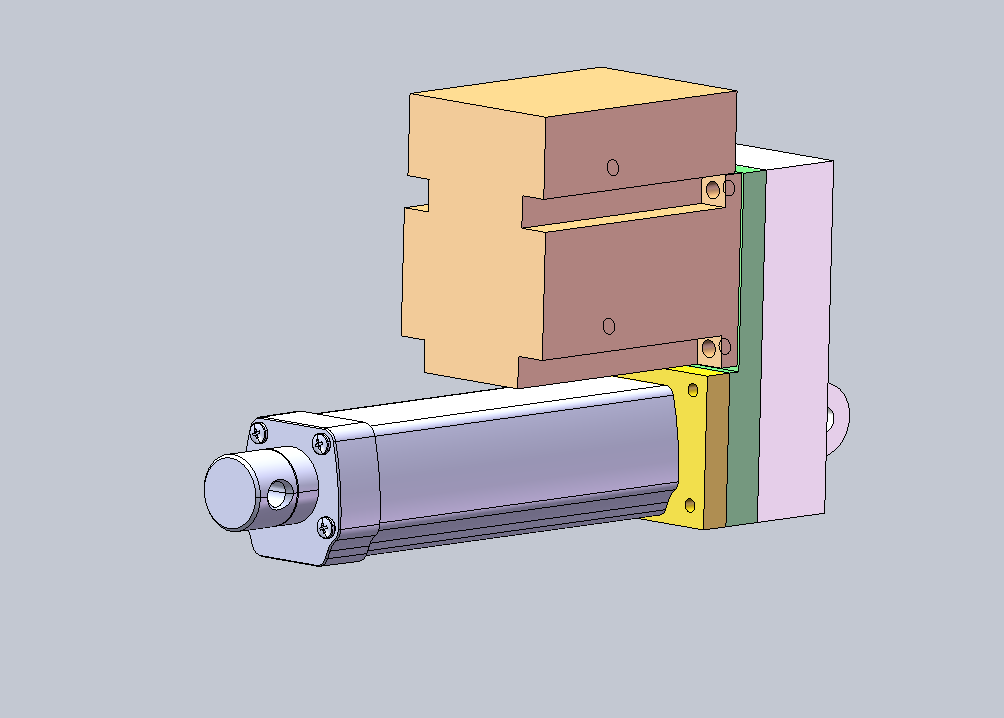
Case Study: Why a Standard 12V Actuator Linear Solution Failed at 1600 N / 150 mm/s — and How a Servo Motor Linear Actuator Solved It
Case Study: Why a Standard 12V Actuator Linear Solution Failed [...]
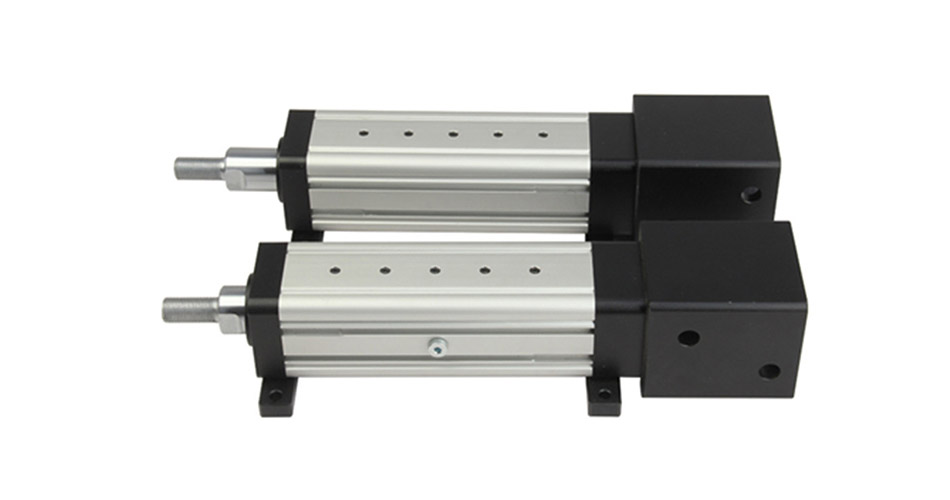
Replacing Hydraulic Cylinders with an 8-Ton Electric Actuator Cylinder in Tire Press Equipment
Replacing Hydraulic Cylinders with an 8-Ton Electric Actuator Cylinder in [...]
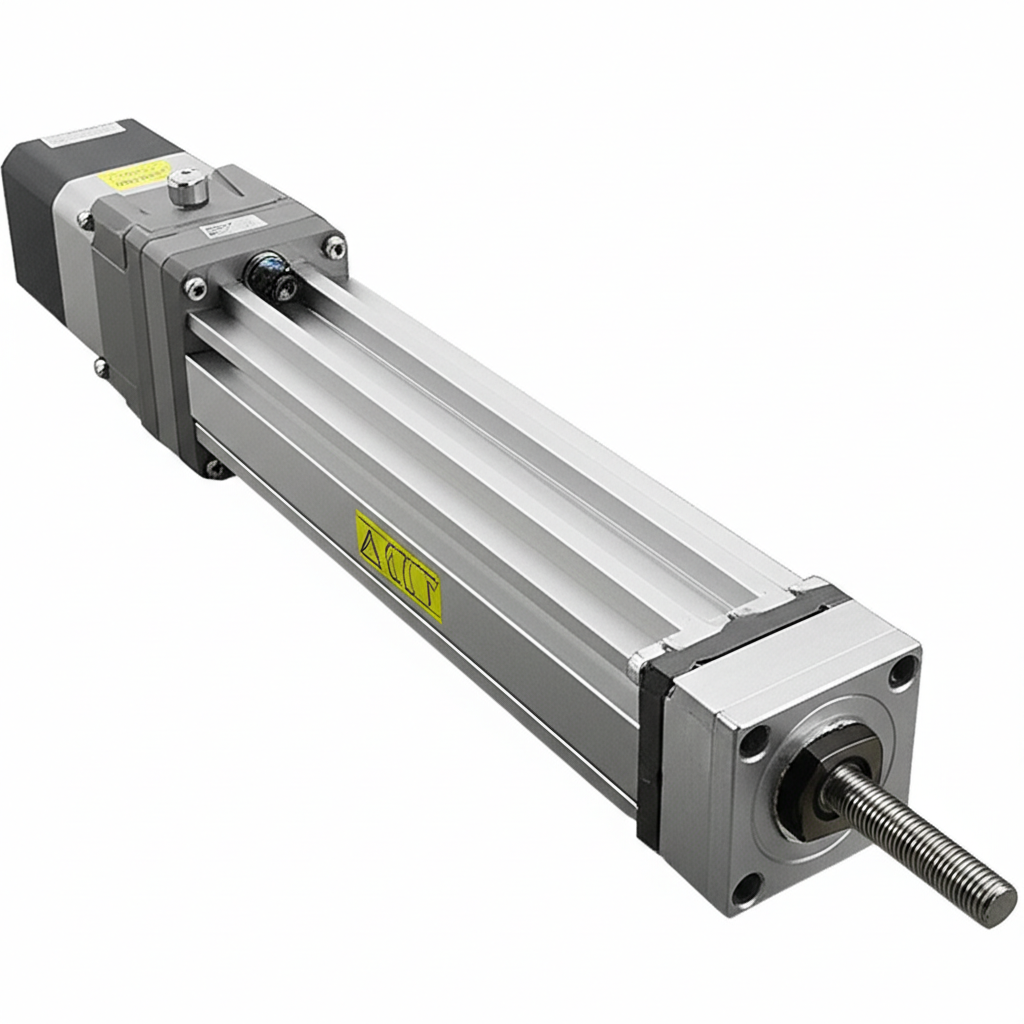
Aircraft Linear Actuator and Aircraft Electric Cylinder Applications in Aerospace & Space
Aircraft Linear Actuator and Aircraft Electric Cylinder Applications in Aerospace [...]

How to Select the Right Servo Linear Actuator: A Complete Guide Based on Thrust and Speed Requirements
How to Select the Right Servo Linear Actuator: A Complete [...]

Speed Control Solutions for Electric Cylinders, Linear Actuators, and Linear Guide Modules: A Cost-Optimized Guide
In modern automation and motion control systems, achieving precise speed [...]
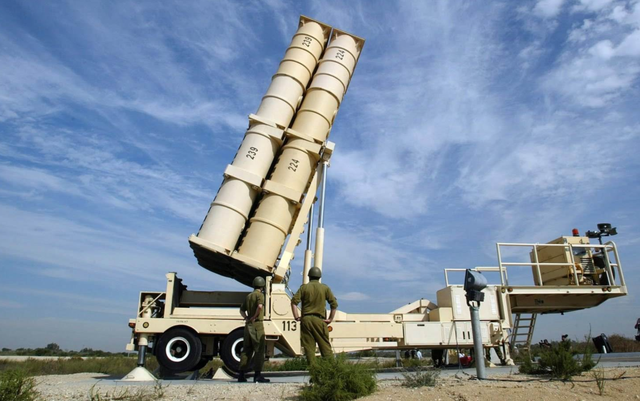
Missiles & Precision Guided Munitions: How Advanced Assemblies Power Modern Defense Strategy
The evolution of Missiles & Precision Guided Munitions represents a cornerstone [...]